







Finding a reliable broker for penny stocks isn’t as straightforward as it sounds. I’ve spent several weeks testing platforms with real money, specifically looking for brokers that offer genuine access to AIM-listed and LSE small-cap shares. I also considered those that keep costs low and actually hold up under scrutiny. This guide covers what I found, including other elements that surprised me along the way.
List of Penny Stock Brokers
- XTB – Best for Cost-Conscious Traders
- Spreadex – Top Option With Excellent Support Service
- IG – Best for Long-Term Investing
- Saxo – Best For Professional Traders
- Interactive Brokers – Overall Best
Note: Penny stocks are among the highest-risk investments available to UK retail traders. They are highly volatile and susceptible to sharp price moves on thin trading volume. So, never invest money you cannot afford to lose entirely.
Compare UK Penny Stock Brokers
FCA regulation was my non-negotiable starting point when testing and comparing penny stock brokers. Every broker on this list is authorised by the UK’s Financial Conduct Authority (FCA). This means client funds are segregated, and you have access to the Financial Services Compensation Scheme (FSCS), which, as of December 2025, covers eligible deposits up to £120,000 per person.
I also considered other elements like costs, platform performance, real user satisfaction, and more. Here is a quick comparison of some of the features differentiating these penny stock brokers in the UK.
| Penny Stock Broker | Licence | Support Service | Demo Account | Software |
|---|---|---|---|---|
| XTB | FCA, CySEC, FSCA | 24/5 | Yes | xStation 5 |
| Spreadex | FCA | 24/5 | No | TradingView, WebTrader |
| IG | FCA, BaFin, DFSA, ASIC | 24/7 | Yes | Proprietary, MT4, ProRealTime, TradingView |
| Saxo | FCA | 24/5 | Yes | SaxoTraderGO, SaxoTraderPRO |
| Interactive Brokers | FCA, BaFin, DFSA, ASIC | 24/5 | Yes | TWS, IBKR Mobile, Client Portal |
1. XTB – Best for Cost-Conscious Traders


I opened an XTB account with a £150 deposit and got started within the same afternoon. Real share purchases are commission-free up to €100,000 of equivalent monthly turnover, which covers the vast majority of retail investors. That includes AIM-listed penny stocks.
I find the xStation 5 platform to be user-friendly on desktop and mobile devices. Sentiment indicators, economic calendars, and a well-organised stock screener are all built in rather than hidden behind paywalls. Spreads are low, starting from 0.8 pips, and there is no minimum deposit requirement for UK clients.
XTB’s “Investment Plans” section is something to keep your eye on for future or retirement investment plans. Its Stocks and Shares ISA gives access to 8,800+ stocks and ETFs, including penny stocks. Plus, you can earn up to 6% on your returns tax-free. I also like that users can invest in fractional shares with as little as £10.
When it comes to user reviews, I did check Trustpilot, where XTB scores well overall. Users regularly praise the platform’s ease of use and reliable educational content. A handful of complaints mentioned the £10 monthly inactivity fee (triggered after 12 months of inactivity). This is worth knowing about if you plan to trade occasionally rather than regularly.

✔ Wide range of global markets




- Zero commission on stocks up to €100, 000 monthly turnover
- No minimum deposit requirement
- Access to 8,800+ real shares, including penny stocks
- Strong educational resources via the XTB Knowledge Base
- £10 monthly inactivity fee after 12 months
- No MT4/MT5 support
| Type | Fee |
| Opening an account | $0 |
| Account type: Standard: spread | 0.5 |
| Account type: Swap Free: spread | 0.7 |
| Forex | From 0.1 pips |
| Stock CFDs commission | 0% |
| ETF CFDs | 0% |
| Crypto commission | From 0.22% |
| Monthly Fee for maintaining an Account | Free of charge or up to 10 EUR |
| Withdrawal fee | $0 |
| Deposit fee | $0 |
2. Spreadex – Top Option With Excellent Support Service
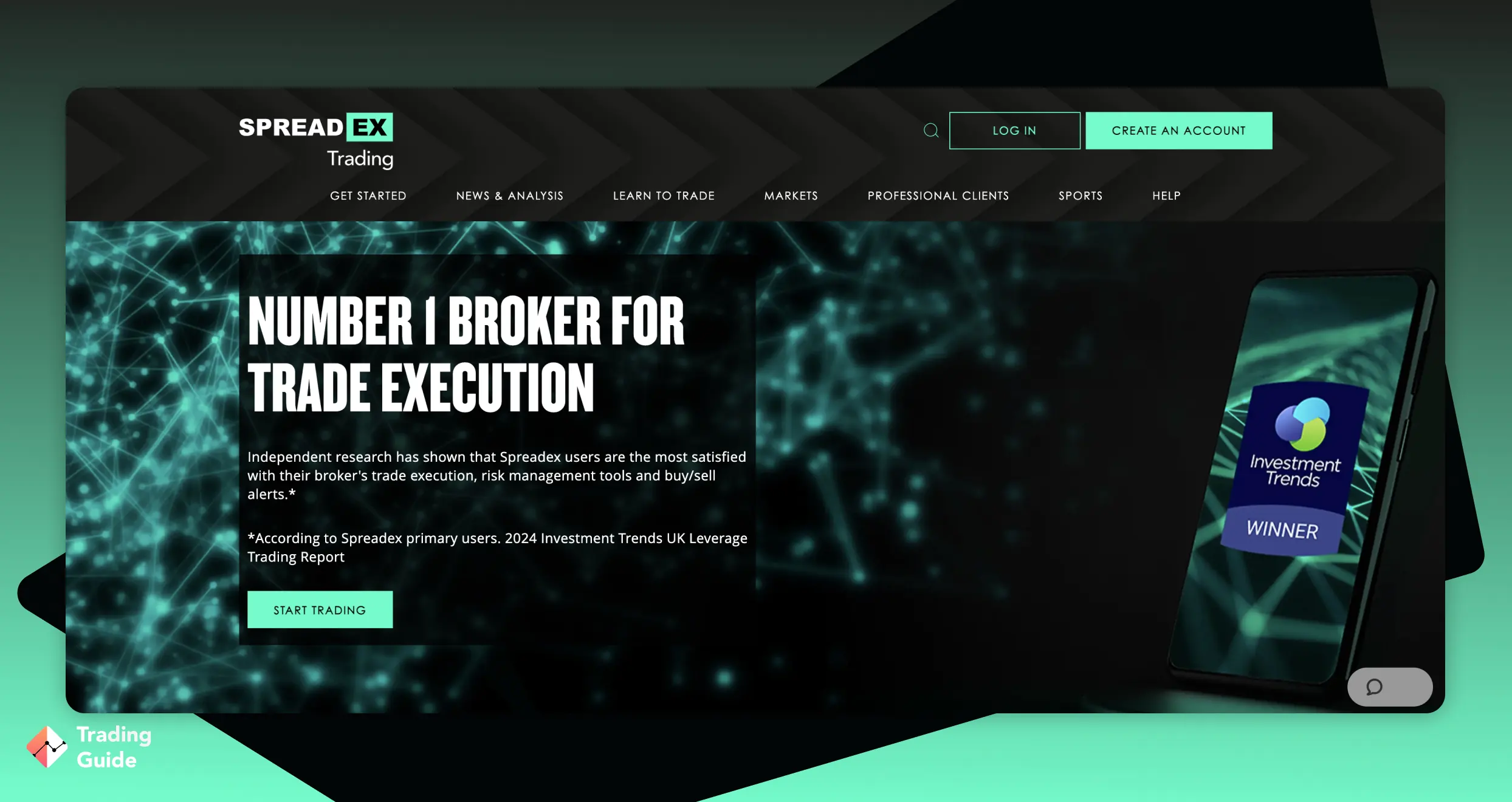
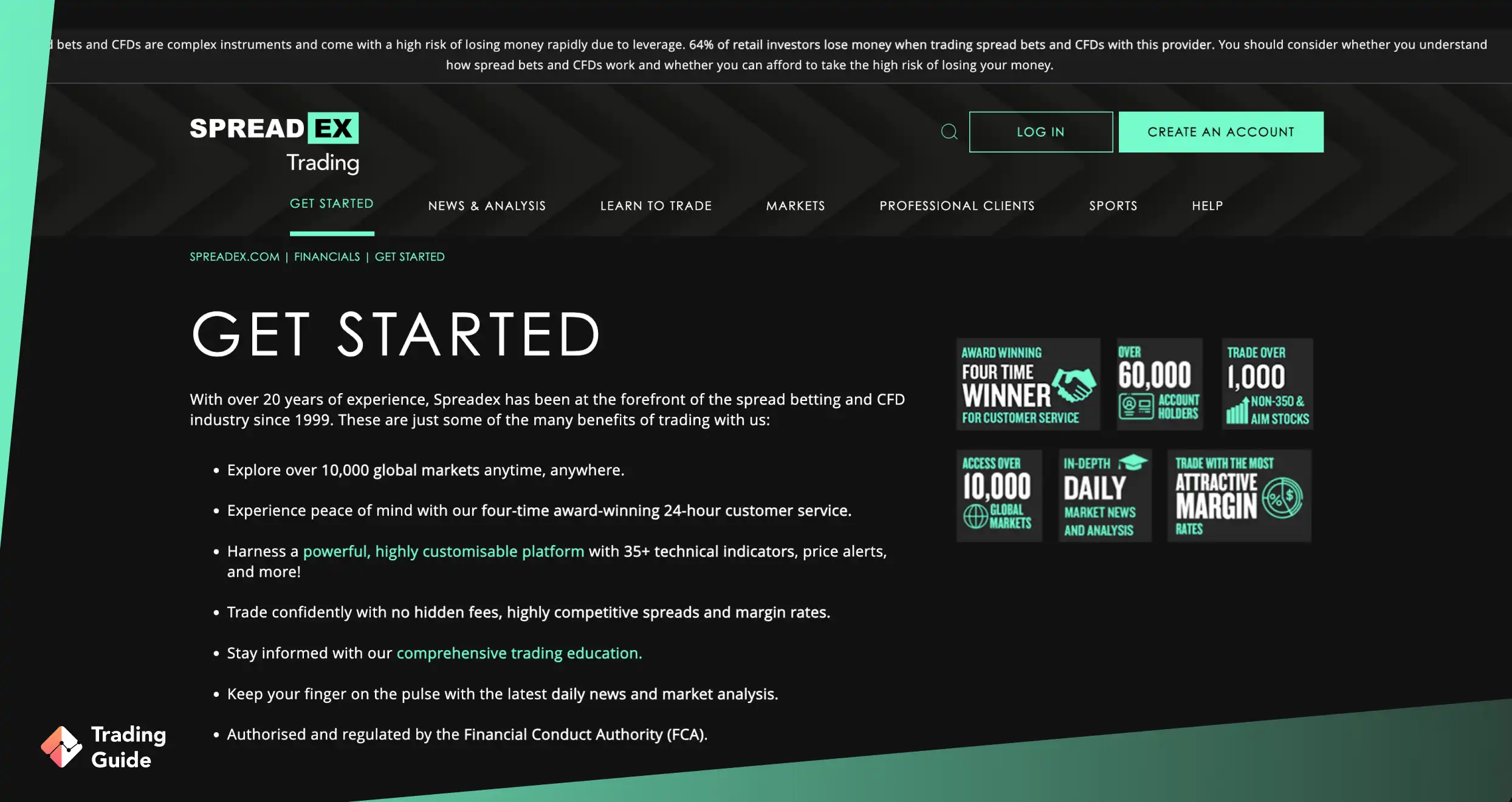
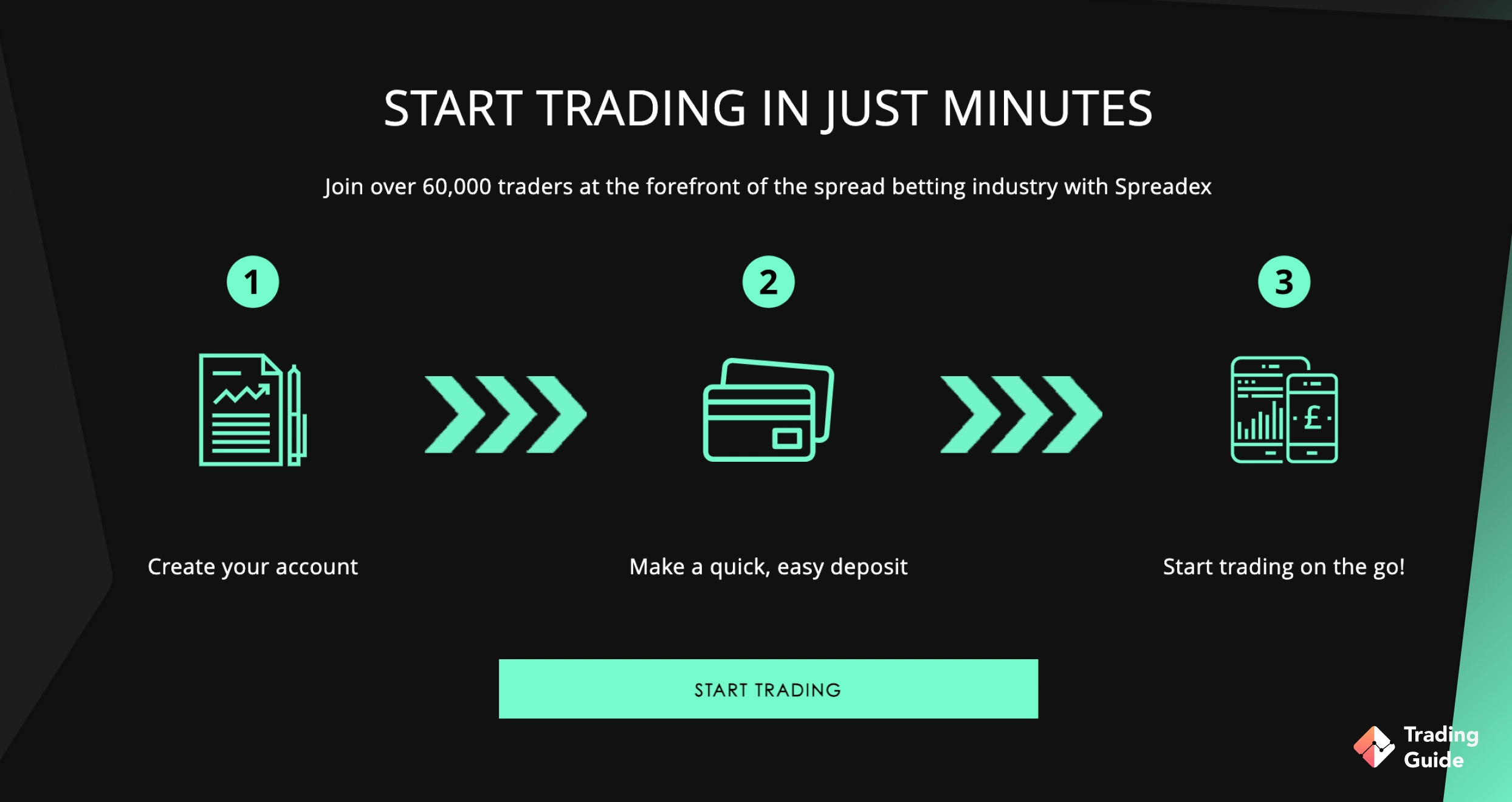
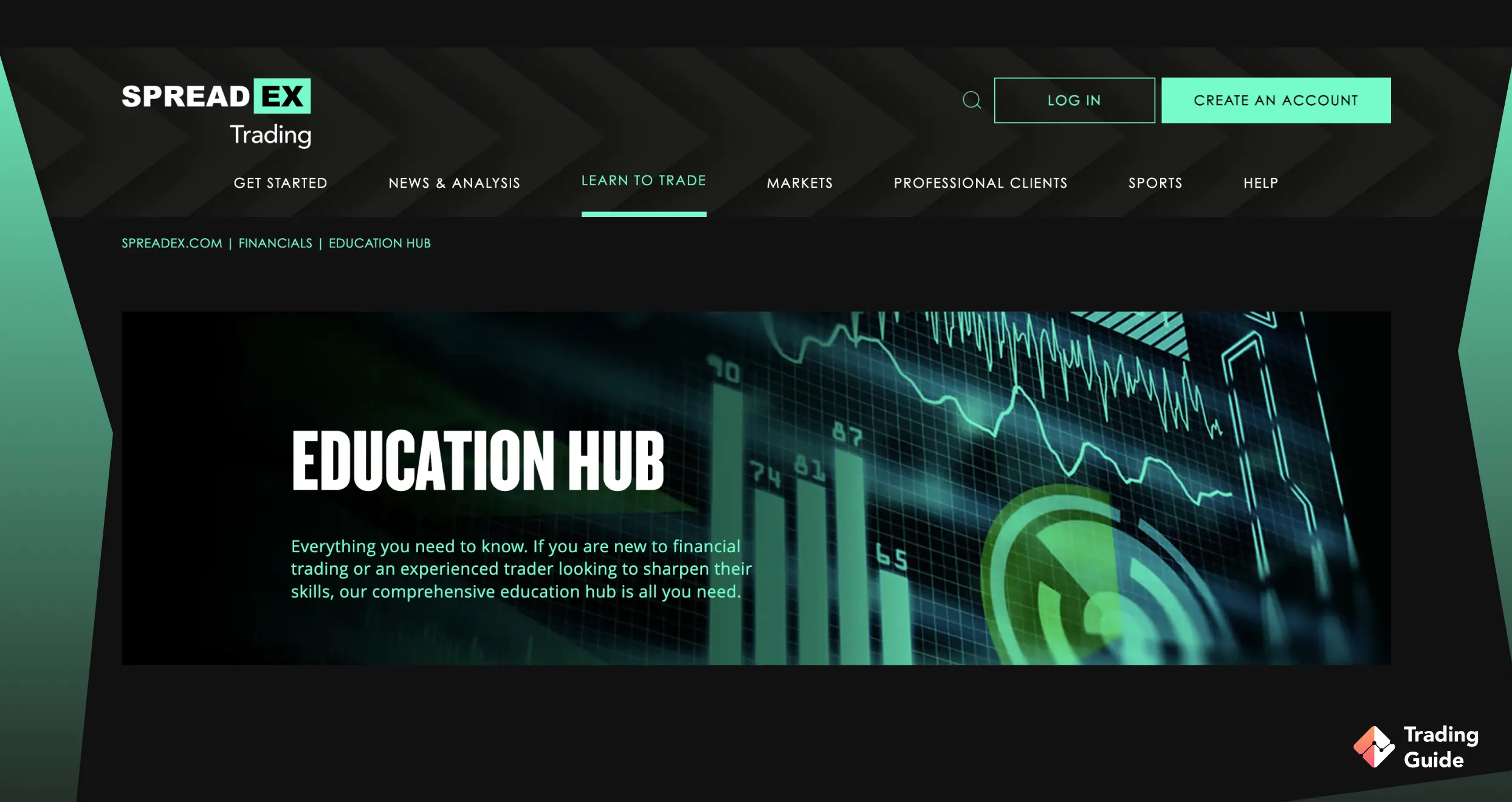
Spreadex was one of the more interesting discoveries during my testing. I started with just £50, as the broker has no minimum deposit requirement. Immediately, I noticed two things. Spreadex gives access to AIM stocks from 15+ global countries that some larger brokers simply don’t list. Plus, it has an unusual level of responsiveness from customer support.
I called at 7 pm on a weekday with a question about a specific small-cap position. A real person picked up within three minutes. That shouldn’t feel remarkable, but compared to offshore call centres and chatbots I’ve encountered elsewhere, it stood out.
TradingView integration is another plus, which is genuinely rare for a no-minimum broker. Spreads on UK penny stocks start from 0.1%, and there are no inactivity fees. My withdrawal via bank transfer arrived in two days with nothing deducted.
Overall, many users recommend Spreadex to beginners, and if you ask me, I would highly recommend it too. However, understand that it has no demo account but this shouldn’t be a determining factor since there is no minimum deposit requirement.
✔Helpful customer service
- No minimum deposit requirement
- Access to AIM stocks and 10,000+ CFD and spread betting assets
- TradingView integration included
- No inactivity fees
- Excellent telephone and live chat support
- No demo account
- Limited research tools compared to larger brokers
| Type | Fee |
| Minimum deposit | Free |
| Overnight fee | Yes |
| Deposit fee | Free |
| Withdrawal fee | Free |
| Inactivity fee | Free |
3. IG – Best for Long-Term Investing
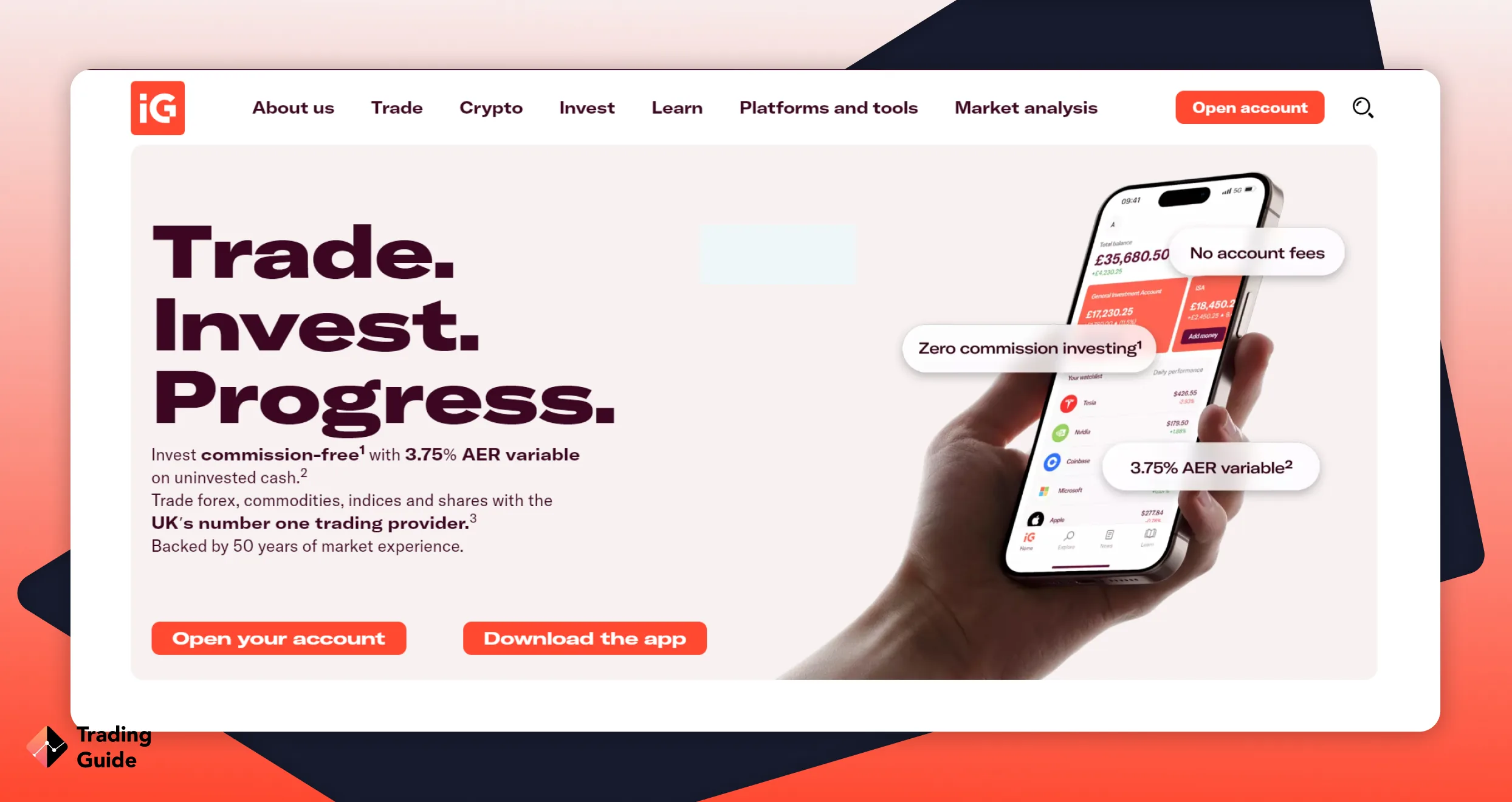

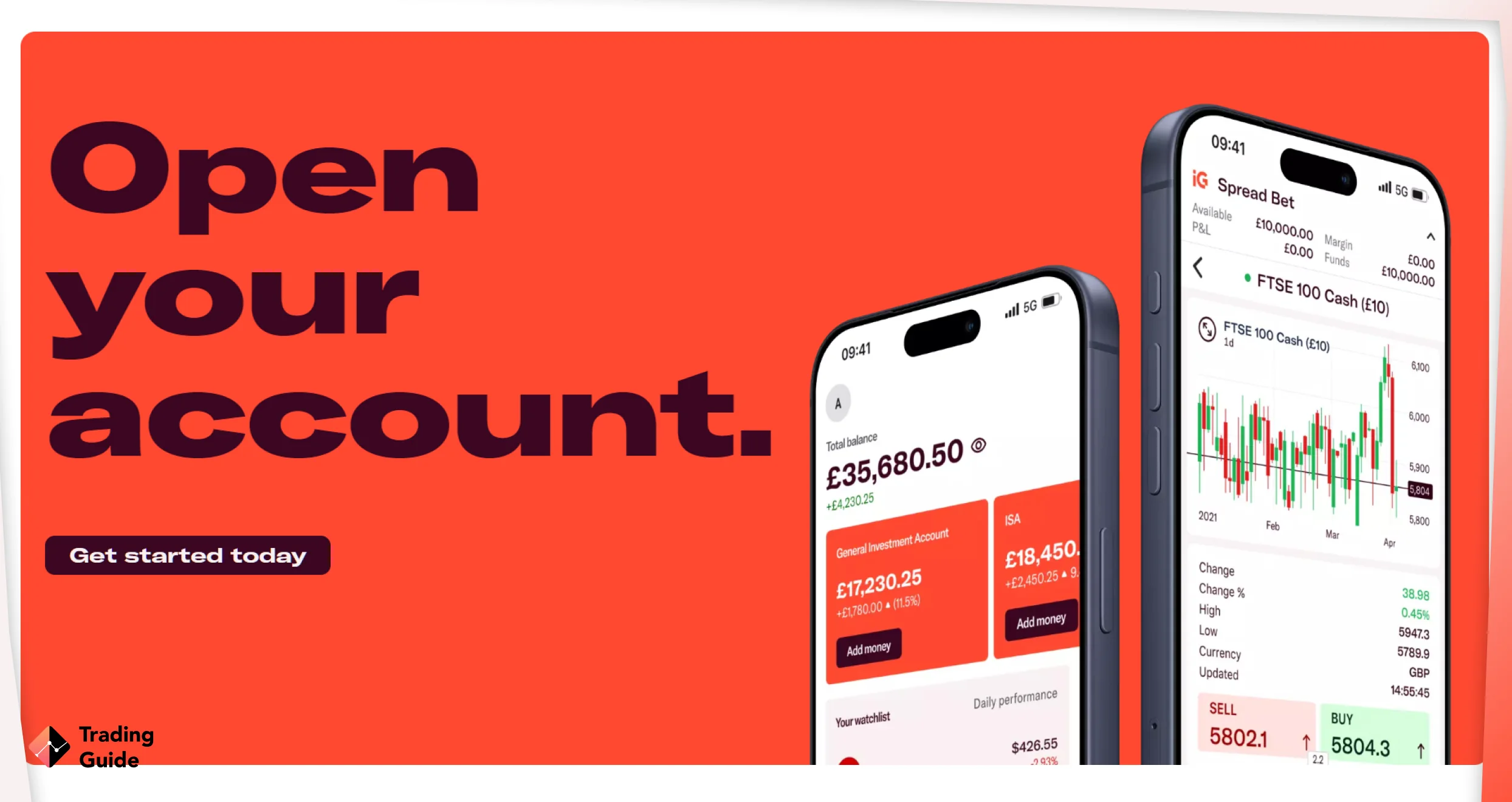
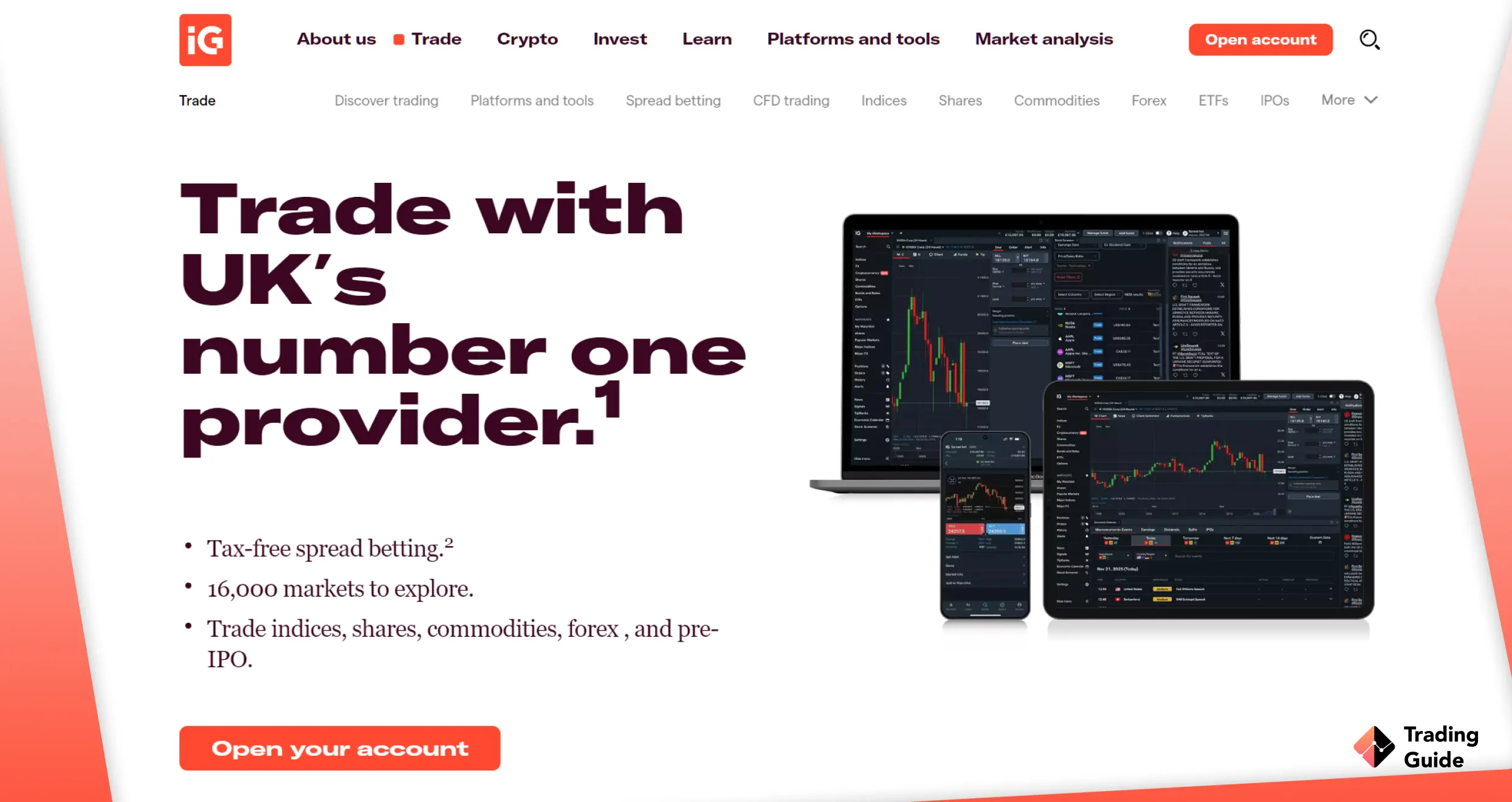
I’ve followed IG for years as an active trader. But it was only when I opened a share dealing ISA with a £250 deposit that I properly explored what it offers long-term penny stock investors. Overall, IG gives you two genuinely different routes into penny stocks. One is leveraged CFD platform for short-term trading and its commission-free share dealing account (available as a GIA, ISA, or SIPP) for buying and holding real shares. There is also spread betting for UK clients.
For long-term investing in penny stocks, the ISA route is compelling. You can shelter gains from capital gains tax, and the zero-commission share dealing on UK GBP accounts means you’re not paying per trade. There’s also a 3.75% AER variable interest rate on uninvested cash up to £100,000, which is a useful feature when you’re building up a position gradually.
The research tools here are excellent. IG’s proprietary platform integrates Reuters news, ProRealTime charting, and an IG Academy with genuine educational depth. I checked Trustpilot, Google Play, and the App Store reviews, and a recurring theme in positive feedback was platform reliability. The main criticism I saw was that the platform can feel complex for complete beginners. Having spent time with it, I’d say that’s fair for the CFD side. The share-dealing platform is actually quite clean. I’d feel comfortable holding a long-term position with.

✔ Leading broker with low fees
- Zero commission on shares and ETFs in GBP GIA, ISA, and SIPP accounts
- No minimum deposit requirement
- 15,000+ global shares
- 3.75% AER variable interest on uninvested cash
- Multiple platforms, including proprietary web, MT4, ProRealTime, L2 Dealer, and TradingView
- The CFD side of the platform can feel complex for beginners
- No cTrader platform support
| Type | Fee |
| Minimum account | £0 |
| Opening an account | £0 |
| Overnight funding | yes (depends on market) |
| Withdrawal fee | £0 |
| Inactivity fee | None |
| Advanced graphs (ProRealTime) | £30 per months |
- Zero commission on stocks up to €100, 000 monthly turnover
4. Saxo – Best For Professional Traders
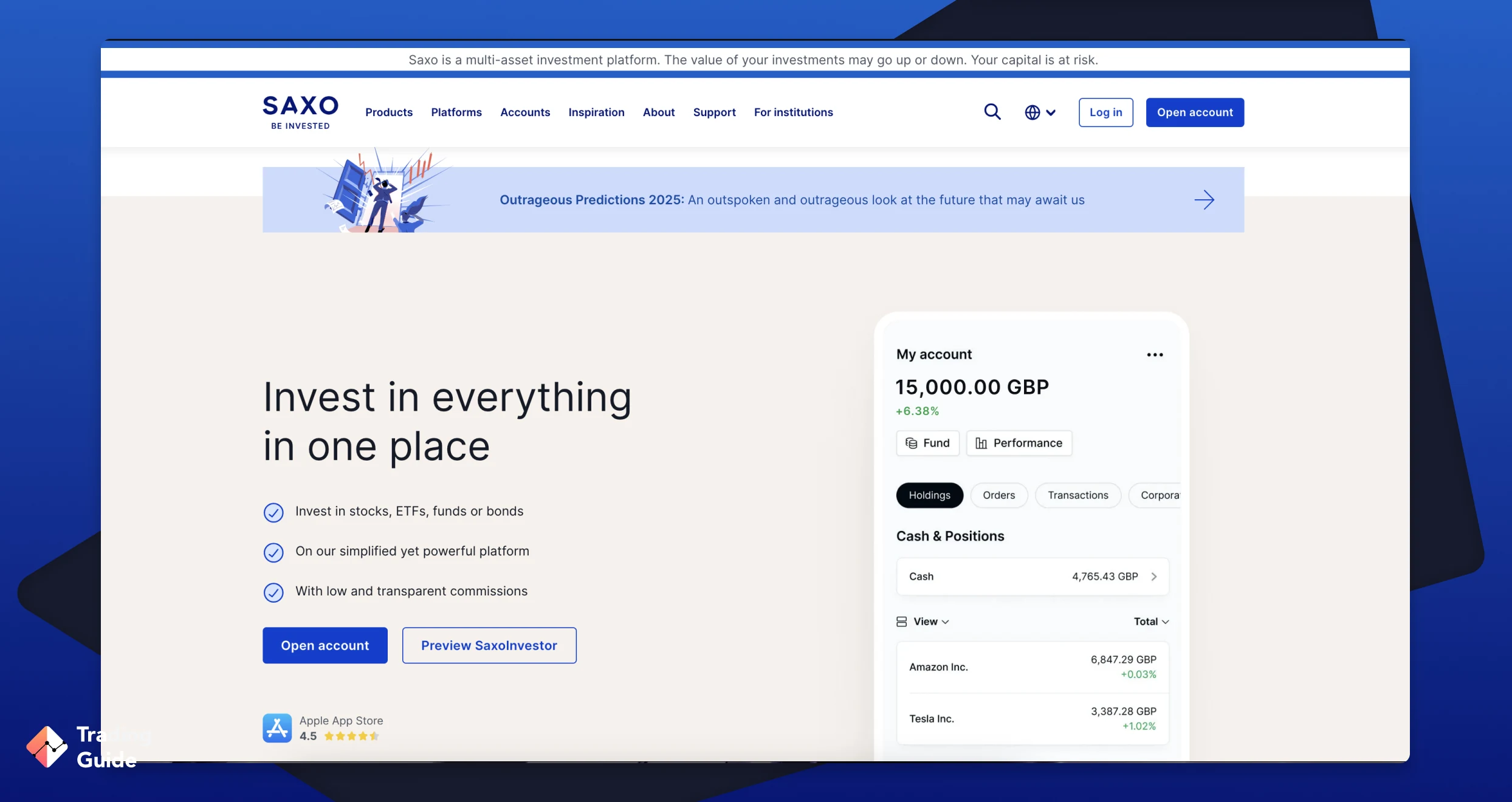
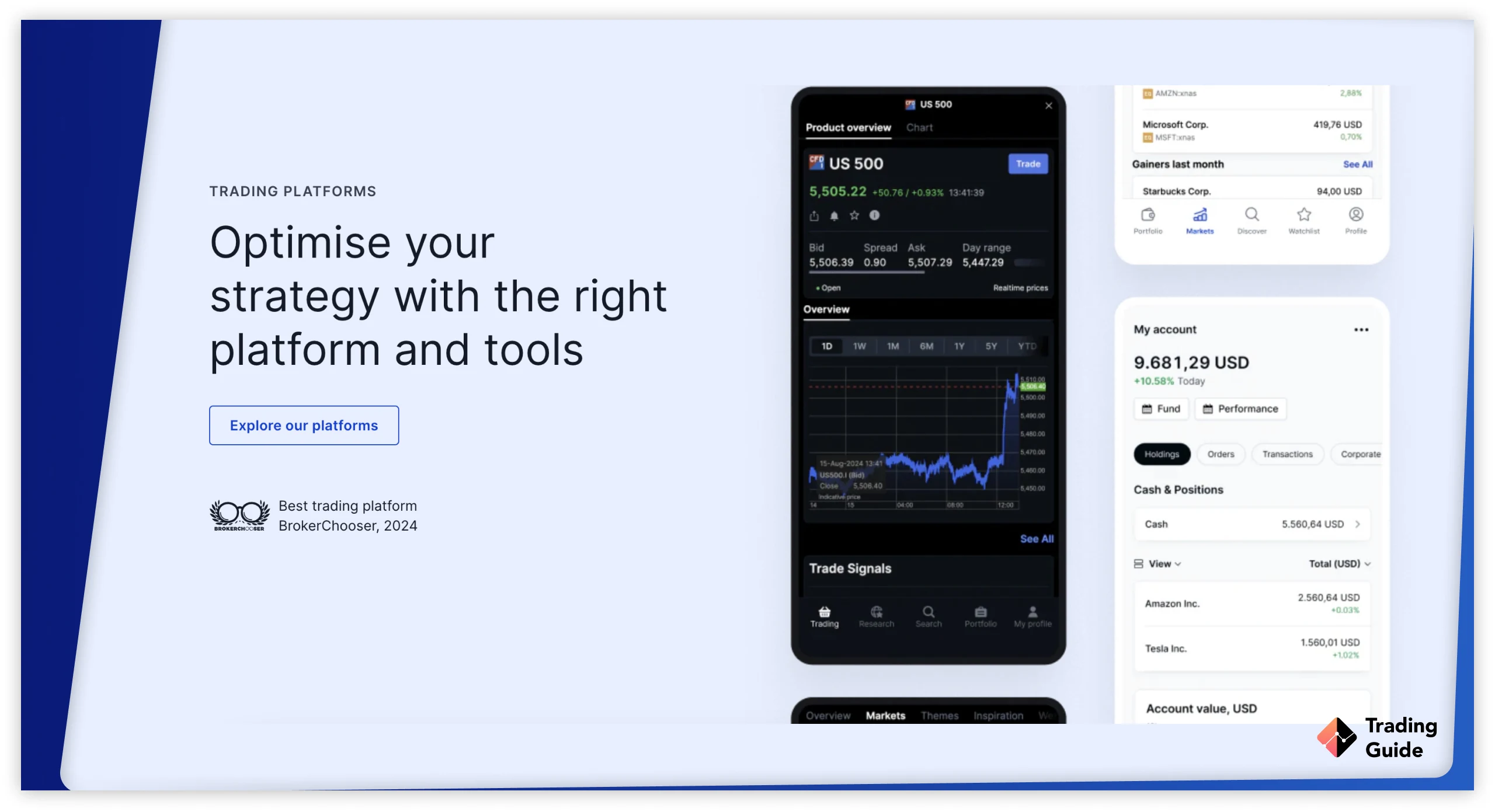
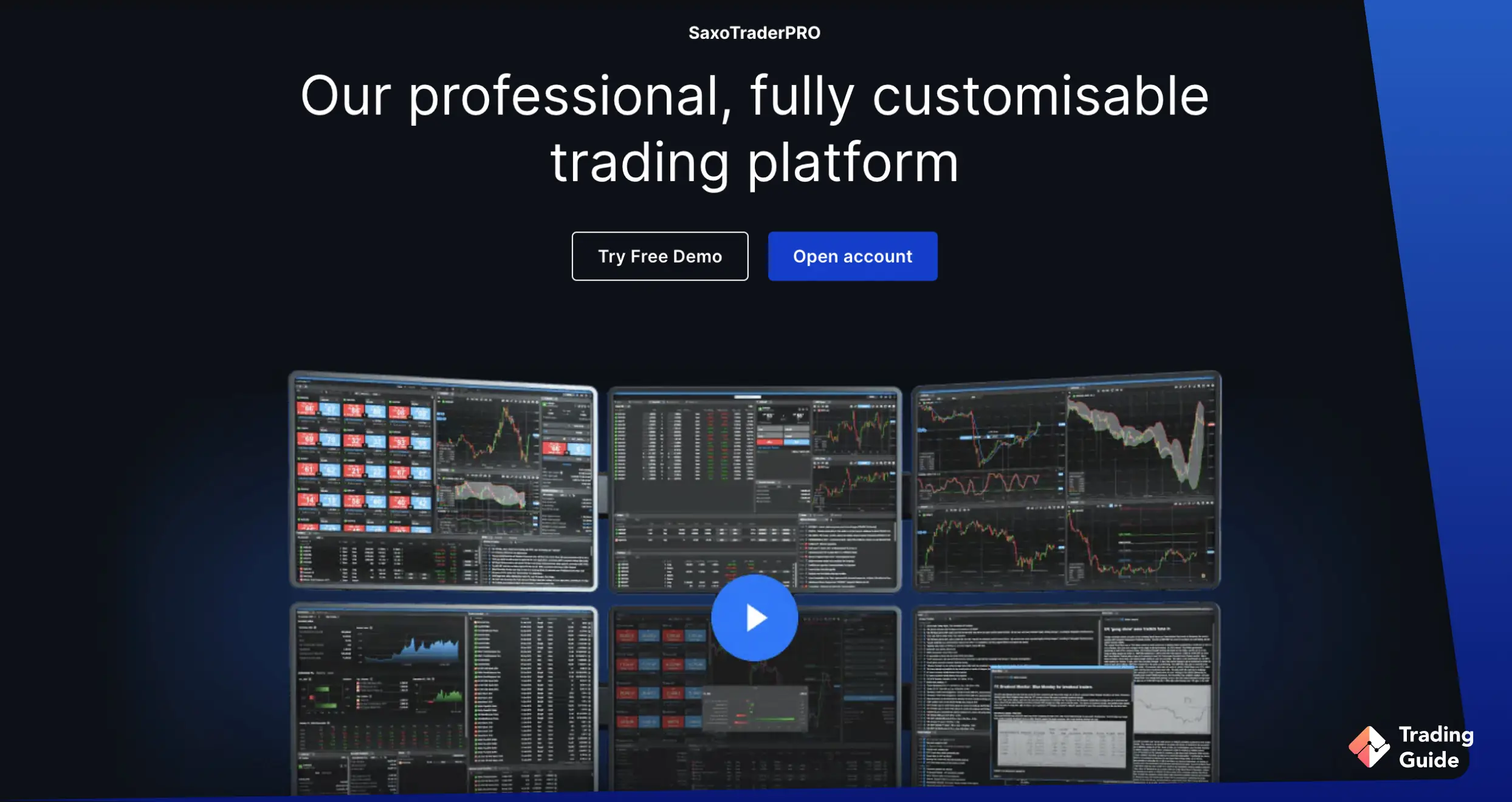

Saxo is, in my opinion, the most complete trading environment on this list but it comes with a price. I tested the Classic account and found the SaxoTrader platform exceptional in terms of design, data depth, and the sheer range of instruments (71,000+) available. For penny stocks specifically, Saxo covers both AIM-listed UK shares and LSE small caps alongside over 23,000 global stocks.
The Classic account charges 0.08% commission on UK stock trades with no minimum per-trade charge since Saxo removed all minimum trading charges for shares and ETFs in November 2025. That change makes it more accessible than it used to be, though the percentage-based model still gets expensive on larger trades compared to flat-fee alternatives.
The Classic account requires no minimum deposit, though Platinum and VIP tiers (which unlock better pricing) require significantly larger commitments. Saxo also features a SaxoInvestor platform for long-term investing of stocks, bonds, mutual funds, and ETFs. The broker is FCA-regulated and holds a banking licence in Denmark.

✔ Best for experienced traders
- Access to 23,000+ global stocks
- SaxoTraderGO and SaxoTraderPRO are among the best platforms available
- Variety of account types to choose from, including SIPP and ISA
- No minimum deposit requirement for Classic account
- Quality market analysis and learning tools
- Percentage-based commissions can get expensive for larger trades
- Saxo Platinum and VIP accounts require large minimum deposits
| Type | Fee |
| Minimum deposit | $0 (for Classic account) |
| Inactivity fee | $0 |
| Deposit fee | $0 |
| Withdrawal fee | $0 |
| Manual order fee | €50 per order |
| Stocks | from $1 on US stocks |
| Futures | $1 per lot |
| Listed options | $0.75 per lot |
| ETFs | from $1 |
| Bonds | from 0.05% on govt. bonds |
| Mutual funds | $0 |
5. Interactive Brokers – Overall Best
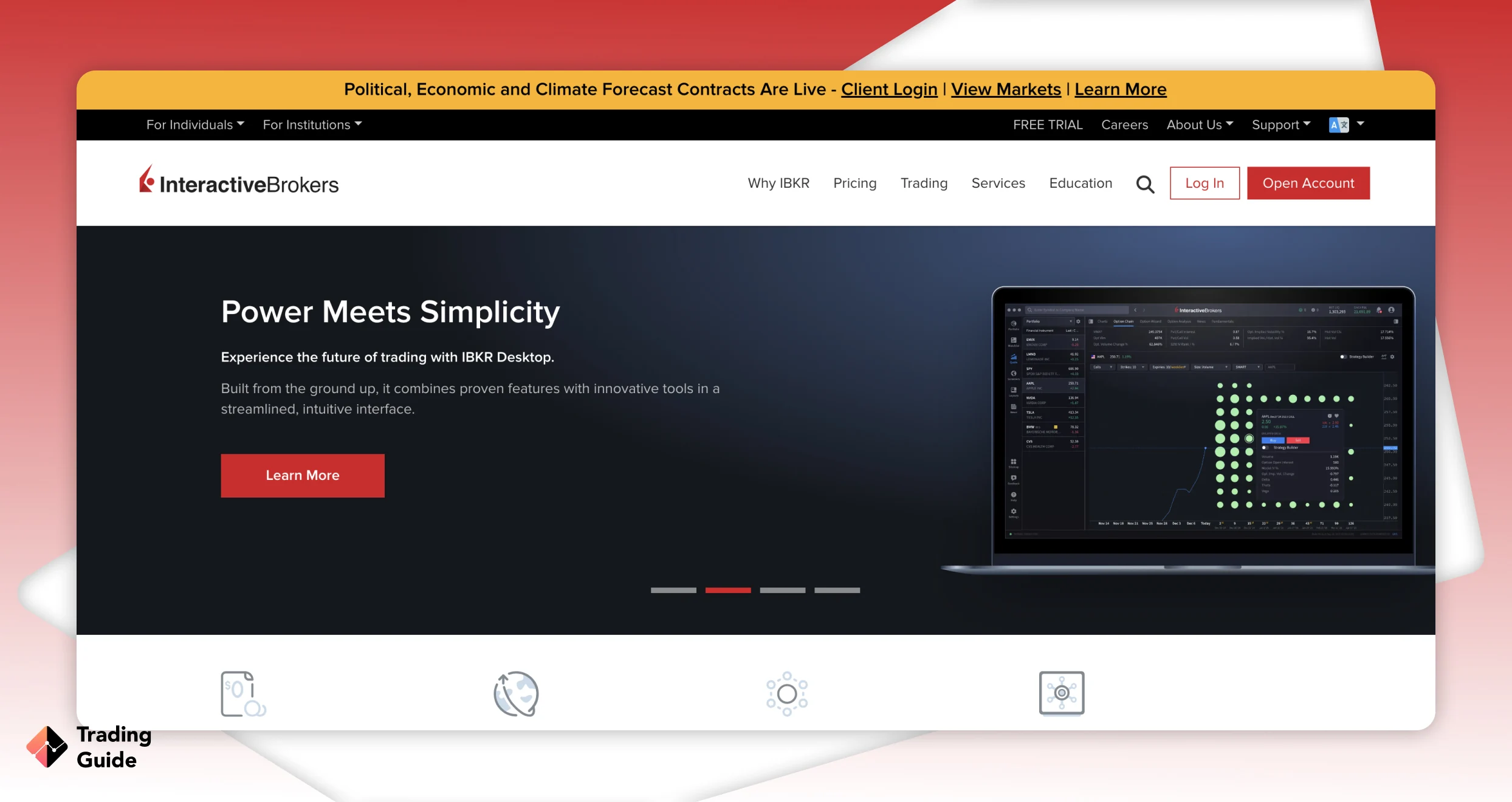
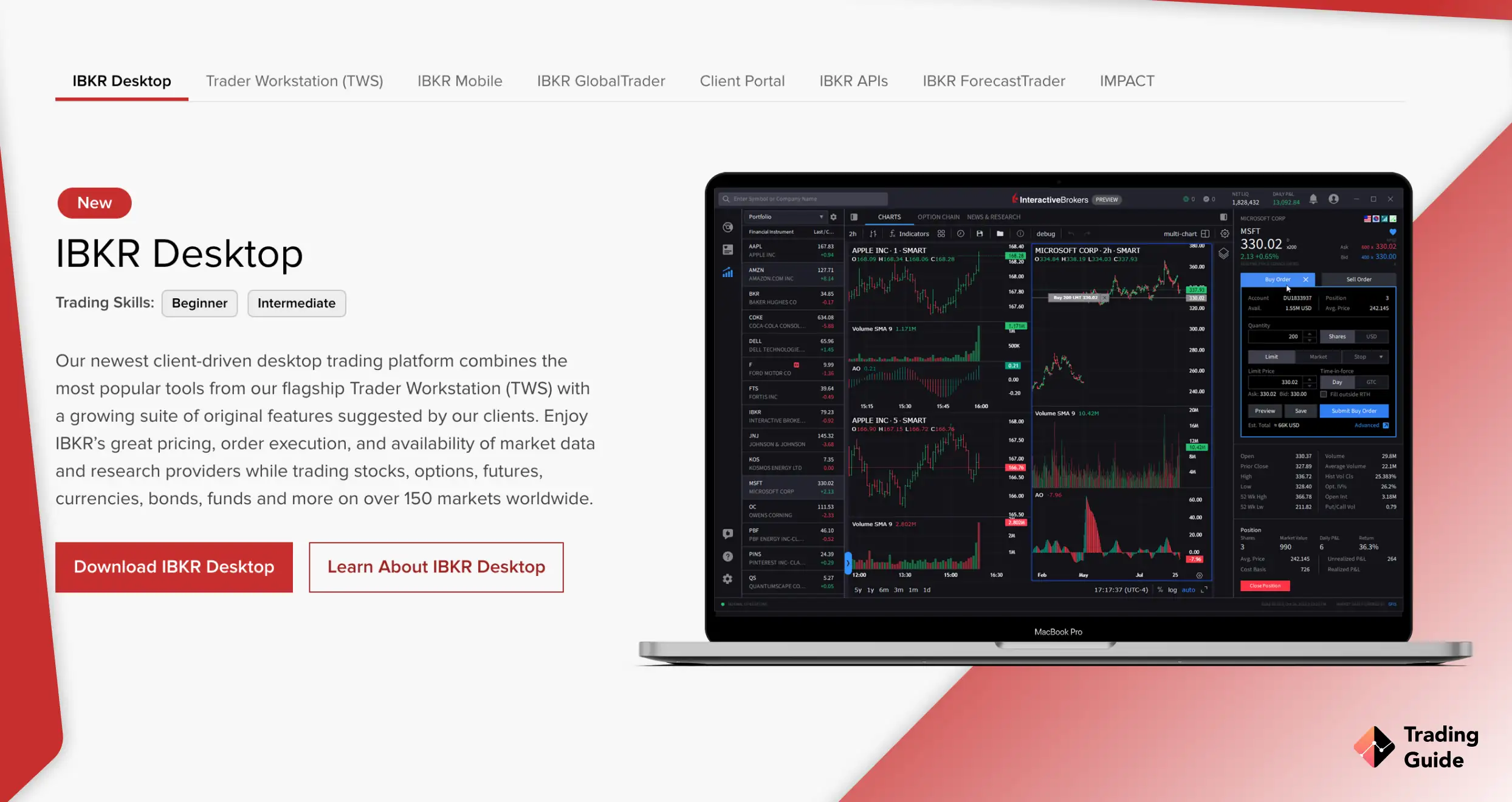
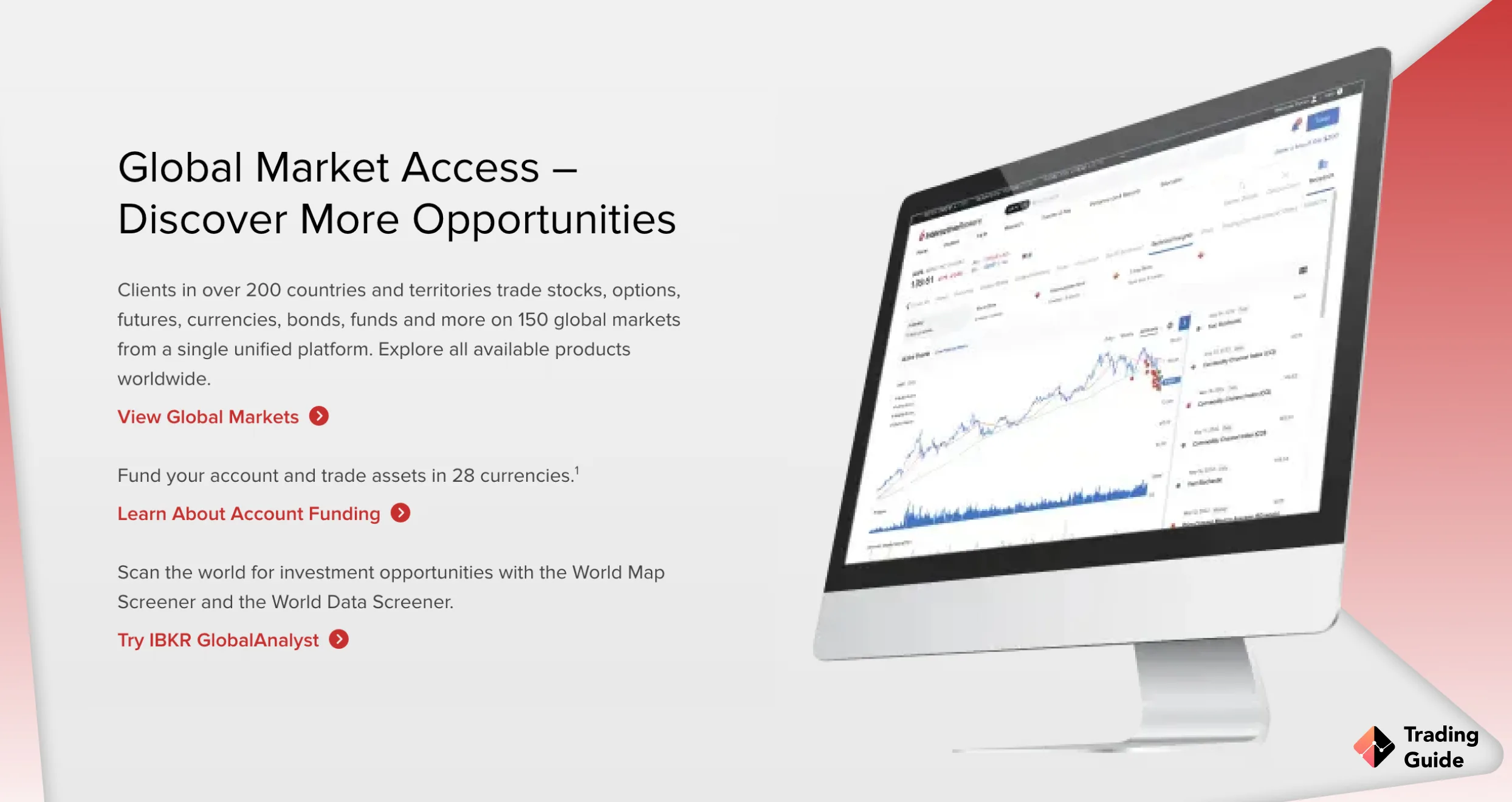
Interactive Brokers (IBKR) is a broker I would choose if I were managing a serious portfolio of UK small-cap stocks. I tested it with a £400 deposit, primarily using the Client Portal (the simpler web interface) rather than the full Trader Workstation, which requires a fair amount of time to explore properly.
The depth of market access here is genuinely impressive. IBKR covers the LSE, AIM, and dozens of international exchanges with access to over 10,000 tradable instruments across 160+ markets. Commission on UK stocks is from £3 per trade, and there are no added spreads, ticket charges, or platform fees. You will also incur low commissions on US stocks ranging between $0.0005 to $0.0035 per share with IB SmartRouting.
One pitfall I noted is IBKR’s minimum monthly activity fee of £3 on the Stocks and Shares ISAs. This means you need to generate at least that much in commissions each month, or it’s charged as a shortfall.

✔ Top trading platform for advanced
- Lists 10,000+ assets, including global shares from 90+ markets
- Ultra-low commissions with no added spreads
- Professional-grade research and analysis tools
- No minimum deposit requirement
- Platform complexity has a steep learning curve
- £3 minimum monthly activity fee on the Stocks and Shares ISAs
| Type | Fee |
| Minimum Deposit | $10 |
| Deposit Fee | Free |
| Withdrawal Fee | Free |
| Inactivity Fee | $0 |
Read about online stock brokers in the UK and NinjaTrader brokers in 2026 in our other guides.
Brief Overview of Recommended Penny Stock Brokers’ Fees and Assets
Confirming penny stock brokers’ trading and non-trading costs can help you choose what aligns with your budget. You should also confirm asset offerings for effective planning and portfolio diversification. Here is what top penny stock brokers in the UK offer.
Fees
| Penny Stock Broker | Minimum Deposit Requirement | Commission/ Spreads | Deposits/ Withdrawals | Inactivity Fee |
|---|---|---|---|---|
| XTB | £0 | Spreads from 0.8 pips | Free | £10 monthly after 12 months |
| Spreadex | £0 | From 0.1% | Free | None |
| IG Markets | £0 | 0.7% FX fees on currency conversion | Free | None |
| Saxo | £0 | From 0.08% | Free | None |
| Interactive Brokers | £0 | From $0.0005 on US stocks | Free | None |
Assets
| Penny Stock Broker | Stocks | Forex | Commodities | Indices | ETFs | Options | Spread Betting |
|---|---|---|---|---|---|---|---|
| XTB | Yes | Yes | Yes | Yes | Yes | No | No |
| Spreadex | Yes | Yes | Yes | Yes | Yes | Yes | Yes |
| IG Markets | Yes | Yes | Yes | Yes | Yes | Yes | Yes |
| Saxo | Yes | Yes | Yes | Yes | Yes | Yes | No |
| Interactive Brokers | Yes | Yes | Yes | Yes | Yes | Yes | No |
What are Penny Stocks?

Penny stocks are shares in small or micro-cap companies that trade at low prices, typically below $5 in the US or below £1 in the UK. Most sit outside the major indices, trade in lower volumes, and get far less analyst attention than larger companies. That makes them riskier. When liquidity is thin, a single large order can swing the price, and you often end up doing research that no one else has done for you.
In the UK, most penny stocks are listed on the Alternative Investment Market (AIM). This is a sub-market of the London Stock Exchange with lighter listing requirements than the LSE. The FCA does not regulate penny stocks themselves, but it does regulate the brokers through which you trade them. So always verify a penny stocks UK broker’s authorisation on the Financial Services Register before opening an account.
How to Invest in Penny Stocks?

A low share price doesn’t mean low risk. A stock going from 5p to zero is still a 100% loss. Most people skip the research on penny stocks because it takes more effort than buying an FTSE 100 share. That’s exactly why it matters. Before putting money in, read the company’s financials, go through any recent RNS filings on the LSE website, and look at how much the stock actually trades day to day. Low volume is a warning sign, not just a detail.
Stop-losses aren’t optional here. Penny stocks can gap down overnight on news, and without a stop you may not get out where you planned. Only trade what you’re prepared to lose entirely on any single name. If that idea makes you uncomfortable, a demo account and smaller sizes are the better starting point. Our guide to trading penny stocks covers strategy, screening, and risk management in much more depth if you want to go further before committing real money.
5 Quick Steps To Start Trading Penny Stocks
Use the comparison above to match a broker to your needs. Consider elements such as costs/fees, platform performance, availability of real shares or CFDs, support service reliability, and more.
Complete the broker’s online application. Then, verify your identity and location by sharing copies of your ID and proof of address such as a utility bill. This is a legal requirement under FCA rules, and the process typically takes 15–30 minutes
For brokers offering demo accounts, use them. Penny stocks move fast, and a demo lets you learn how the platform handles limit orders and real-time quotes before your money is at risk.
Only deposit what you’re genuinely fine losing. All brokers on this list accept bank transfers, cards, and most accept e-wallets. Deposits are free across the board.
Check the company’s financials, trading volume and recent price history before opening a position. When ready, set a stop-loss and size your position. Penny stocks are not a place to over-commit early.
Find out more about the best ETF brokers in the UK in another article.
FAQs
Most penny stock brokers have no minimum deposit requirement, so you can technically start with as little as £50. Since transaction costs and spreads may make very small positions impractical, a starting point of £100–£250 gives you enough to build a small, diversified position without the fees eating your returns.
No. You cannot lose more than your deposit when trading penny stocks in the UK. This is due to mandatory negative balance protection enforced by the FCA.
AIM is the Alternative Investment Market, a sub-market of the London Stock Exchange designed for smaller, growing companies. It has lighter listing requirements than the Main Market, which means many UK penny stocks are listed there.
Yes, up to a point. The FSCS covers eligible deposits up to £120,000 per person per firm if the broker itself fails. It does not cover losses from trades. Those are entirely on you.
XTB is probably the easiest place to start. Zero commission on share purchases, a clean platform, and a solid set of educational tools make it accessible without much prior experience. Spreadex is another decent option if you want strong AIM coverage, though the lack of a demo account is worth factoring in.
Conclusion
No single penny stock broker will suit every type of penny stock investor. What actually matters is whether it gives you access to the stocks you want, keeps costs fair, and is properly regulated. Use the demo accounts where they’re available, start with sizes you’re comfortable losing, and don’t rush the research phase. The risk with penny stocks is real. So is the potential, but only if you go in with your eyes open.
How we test?
Our evaluation and testing process is thorough and exhaustive. First, we conduct extensive research. Our experts visit each broker’s official site and assess every offering. Then, we go to credible review sites like Trustpilot, Google Play, and the App Store and read user testimonials and feedback. After research, our experts proceed to the next step: testing.
The testing phase is critical in determining if brokers deliver as promised. We used demo and live accounts to vet available trading platforms, tools, and other resources. While doing so, our experts strive to identify the most pronounced strengths and weaknesses.
Why do we do all that? It’s simple. You are a valued member of the TradingGuide family, and we are committed to doing everything in our power to ensure you have access to the best brokers. Find out more about our test process here.
Related Articles:





Do penny stocks really make money?
When it comes to tracking stock prices, it's important to keep a cool head. Don't get excited and don't let your emotions take you over. This way you will make wise investment choices and you will be able to start well on the stock market. Following this stock market advice means that you are reducing your margin for failure.
The article gave me a clear understanding of choosing a broker and shared the opinions of other traders. Information about XTB, AvaTrade, SpreadEx, Interactive Brokers and Saxo Markets was very useful. Feedback from traders added objectivity, and I especially appreciated their experience and advice. The How to Start Trading Penny Stocks and Risks of Trading Penny Stocks sections provided important steps and made you aware of the risks. As someone interested in crypto, I found the article useful notes for diversifying your investment portfolio.
This guide provides valuable information for investors, skillfully emphasizing the significance of selecting the right broker. It imparts the knowledge necessary to navigate a volatile stock market. The curated list of top brokers proved highly beneficial to me!
I'm interested in penny stocks and would like to know more about the best penny stock brokers in the UK. Can you recommend any?
Hi, Latestmodapks! Thank you for your comment. You can go into our article about the best penny stock brokers in the UK and find suitable for you.
Interesting read! I'm currently looking for a reliable penny stock broker in the UK, and this post has provided me with some valuable insights. I appreciate the breakdown of each broker's fees, commission structures, and reliability. Will definitely consider these options for my next trade. Thanks for sharing!
Great post! As a UK-based trader, I'm always on the lookout for reliable penny stock brokers. I've tried a few of the ones listed here and can confirm that they offer competitive pricing and good service?
It's useful for beginners like me, especially the section on fees and assets. I’ll probably start by looking into XTB since it’s budget-friendly with no minimum deposit.
Love how this breaks down both fees and asset coverage across brokers — super helpful
I opened an account with XTB to buy UK micro-caps tax-free, but half the AIM tickers I searched for weren't available as real shares. Is a £0-commission platform actually viable for true small-cap investing, or do you eventually have to bite the bullet on IBKR's minimum fees just to get access?